
- Plot No. 158 Varanasi Road Near Krishna Marriage Lawn.
Marhar Mau Khurd Lucknow 226002 (U.P)

Single Post
How AI is being used in Sewage Treatment Plant...
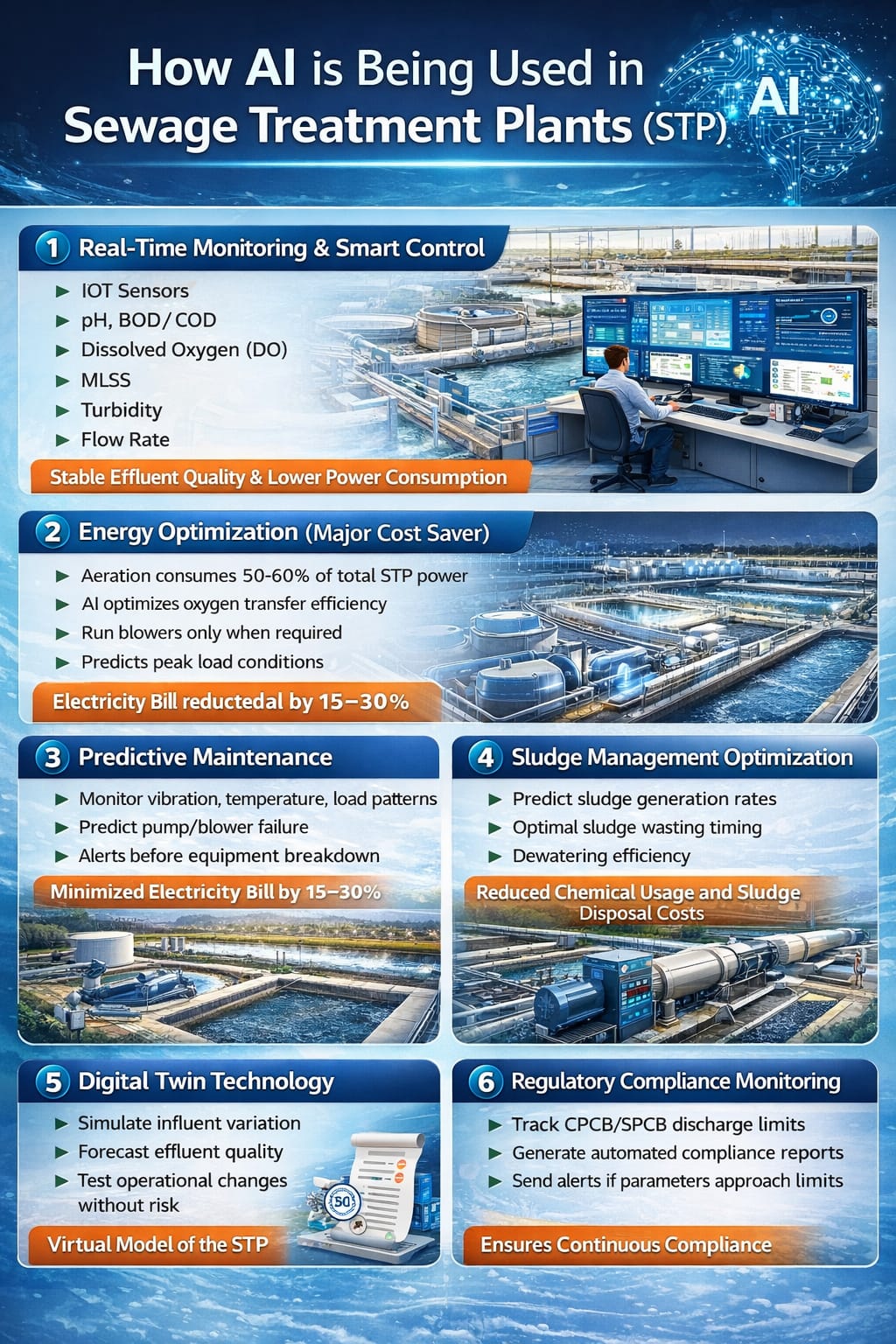
Modern wastewater treatment plants are rapidly transforming into intelligent, self-optimizing systems powered by Artificial Intelligence (AI), IoT, and advanced data analytics.
🔹 Key Technologies Driving the Change
1- Real-Time Monitoring with IoT Sensors
Advanced sensors continuously monitor:
PH
BOD & COD
Dissolved Oxygen (DO)
Turbidity
Flow rate
These sensors send live data to cloud-based platforms or SCADA systems, enabling instant visibility and control.
2- AI-Based Process Optimization
AI algorithms analyze real-time and historical data to:
Adjust aeration automatically
Optimize chemical dosing
Predict sludge generation
Reduce energy consumption
This significantly improves operational efficiency and lowers operating costs.
3- Digital Twins & Predictive Analytics
A digital twin is a virtual replica of the treatment plant that simulates:
Plant performance
Equipment behavior
Effluent quality outcomes
Predictive models forecast:
Equipment failures
Effluent quality trends
Regulatory compliance risks
This enables proactive maintenance and smarter decision-making.
💡 Why It Matters
✔ Adapts to fluctuating influent conditions
✔ Reduces manpower dependency
✔ Cuts energy and chemical usage
✔ Ensures consistent compliance with stricter discharge norms
✔ Lowers lifecycle operational costs
Read Comments